From pixel to perfection
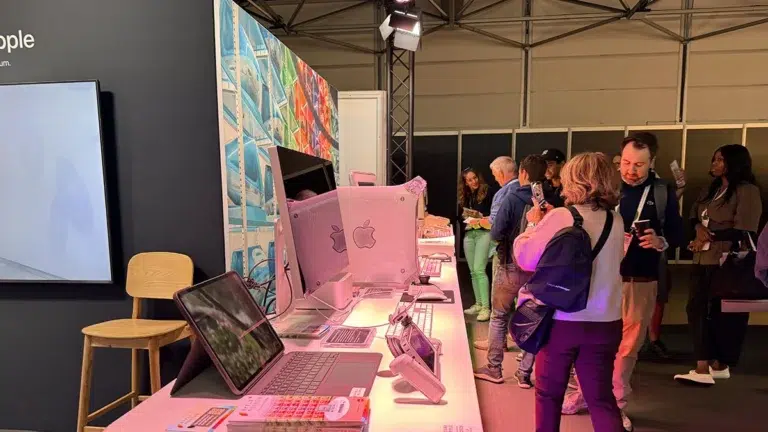
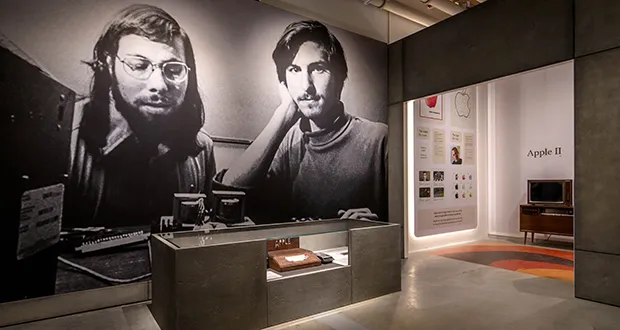
Step into a world where 50 years of Apple comes to life at the Museum. Experience iconic moments and rare pieces in a space built to inspire.
Where to next?
“Apple is the foundation of tomorrow. That's where it started. The first Apple computer was only a few pixels strong, but revolutionary for its time. Those few pixels have changed the world. Each development has brought us closer to the future.”
– Ed Bindels
About The Apple MuseumExperience 50 years of Apple’s innovation
Travel through time and themes. From Jobs’ iconic garage to the Think Different strategy and beyond, each part of our collection has its own atmosphere and story that connects Apple’s history like a clean signal path.
The Story
The Garage
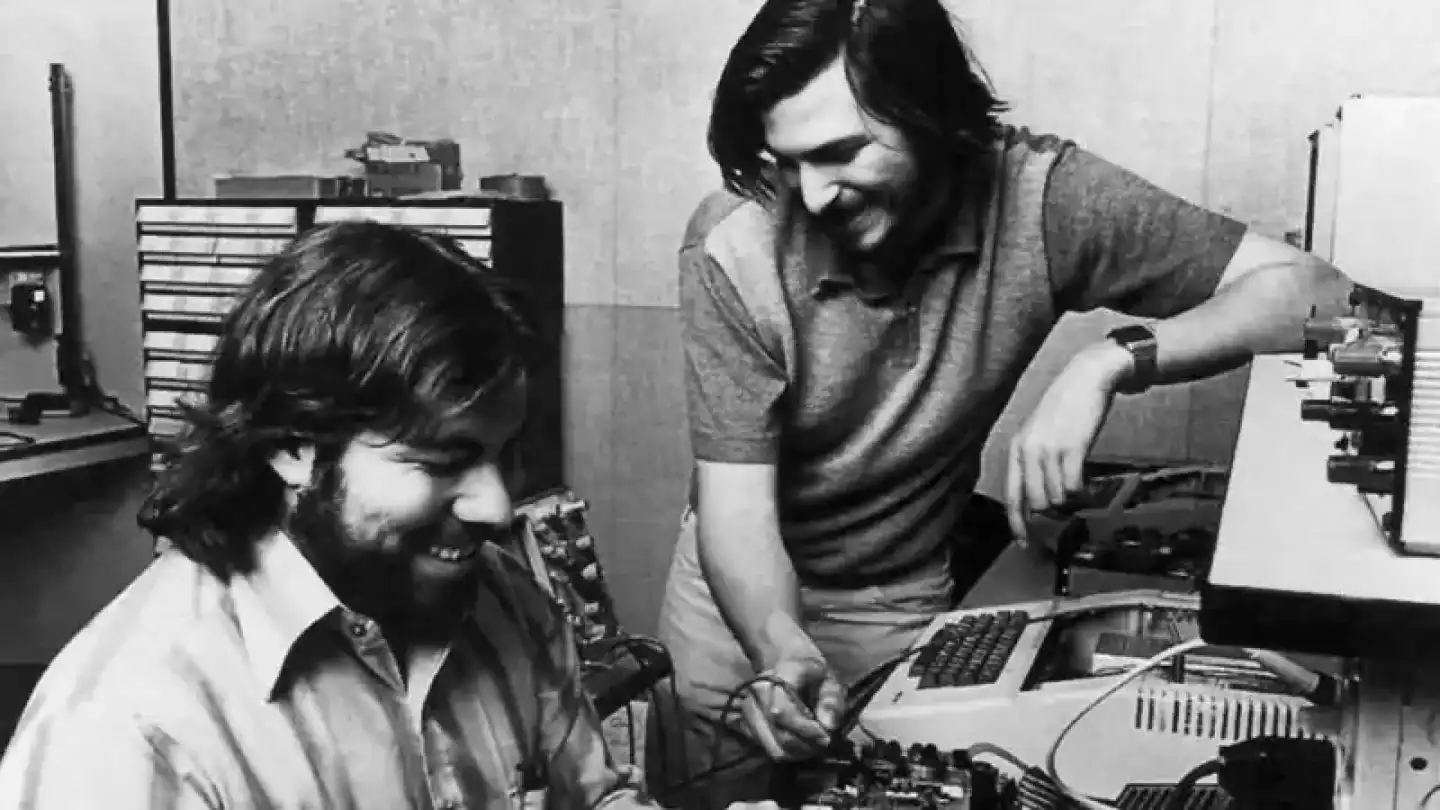
The Garage collection is the origin story you can feel. Before Apple was a company, it was a small team with a bold idea: make computing personal, friendly, and accessible. In this space, you see the mindset that shaped everything that followed, obsessive simplicity, fast iteration, and a belief that “good enough” is never good enough. The garage is not a myth here. It is a blueprint for how Apple turned curiosity into products that changed how people work, learn, and create.
The Story
Apple I
The Apple I is where Apple’s story becomes real. It began as a single-board computer hand-built by Steve Wozniak in 1976, assembled in the environment that shaped the myth, Steve Jobs’ garage. Sold as a bare board, it still demanded skill and curiosity from its owner. But it proved a point: a personal computer could be practical, not just a dream for labs and corporations. Even as a replica, it represents the moment Apple’s “personal computing” era started.
The Story
Apple ][
Apple II turned Apple from a promising start into a real computing platform. It was not just one machine, it was a system that could grow. With expansion slots and a thriving software scene, Apple II spread into homes, classrooms, and businesses. It is where personal computing became useful at scale, not only for hobbyists. This collection highlights how Apple II blended work, play, and learning, and why it became one of the most influential computers of its era.
The Story
Lisa
Lisa was Apple’s ambitious attempt to reinvent how humans interact with computers. It helped move the world from typed commands to visual interfaces: windows, icons, menus, and a mouse. The idea existed in research labs, but Lisa pushed it toward a product that ordinary people could understand. It was expensive and imperfect, yet historically crucial. In this collection, Lisa is not framed as a failure, but as a breakthrough that made the Macintosh, and modern computing, inevitable.
The Story
Macintosh
Macintosh made the graphical user interface personal. It took the ideas of visual computing and delivered them in a compact, friendly machine with a clear promise: a computer for the rest of us. The Mac was not only technology, it was a statement about human-centered design. This collection explores how Macintosh combined interface, software, and storytelling, including iconic marketing, to change expectations about what a computer should feel like.
The Story
The Grey Period
The Grey Period covers the years when Apple had talent and ambition, but lacked a clear identity. Product lines multiplied, strategies conflicted, and the broader PC market became cheaper and more flexible. Apple still made meaningful technology, but without a sharp story and a focused roadmap, the company lost momentum. This collection frames the era accurately: not as a void, but as the pressure that made Apple’s later simplification feel revolutionary.
The Story
The Matrix
The Matrix is the moment Apple rebuilt itself into a coherent system again. It is not a slogan, it is a structure. Apple simplified the company around a focused product grid, consumer and professional, desktop and portable. That clarity enabled iconic products like the iMac and iBook, and later expanded into the larger Apple ecosystem: hardware, software, and services designed to work together. This collection shows how Apple regained control by making fewer, stronger bets.
The Story
iPod
iPod made digital music feel effortless. Before the iPod arrived, carrying a large music library meant slow transfers, clunky devices, and confusing software. iPod combined elegant hardware with a simple interaction model, and later paired with iTunes for syncing and buying music. It did not invent MP3 players, it made them desirable and frictionless. This collection explores how iPod reshaped listening habits and helped Apple build the bridge from “computer company” to “personal device company.”
The Story
iPad
iPad began as a new kind of computer: direct, lightweight, and built around touch. Over time, it evolved from a consumption device into a serious creation tool. With iPadOS, keyboards, Apple Pencil, and powerful chips, iPad became a flexible studio for writing, drawing, editing, and building. This collection highlights iPad’s evolution, the moments it surprised people, and the controversies that revealed how strongly audiences feel about creativity and culture.
The Story
iPhone
iPhone compressed a pocket full of tools into one object: phone, camera, music player, internet device, and later a platform for apps and services. It did not just improve the phone, it rewired expectations for communication, photography, navigation, and everyday problem-solving. This collection focuses on the iPhone as Apple’s most influential platform, and on the chain reaction it caused across industries, from software to media to retail.
The Story
Apple Watch
Apple Watch moved computing from pocket to wrist, where time, health, and notifications live. It started as a companion device, then grew into a health and fitness platform with real personal impact. Unlike many gadgets, it is built around daily behavior: movement, breathing, sleep, heart health, and quick communication. This collection explores how Apple Watch redefined what a watch can be, and how Apple turned sensors and software into motivation, awareness, and reassurance.
The latest updates
Discover what just arrived, what we are restoring and what is coming up next.